
May 1, 2025

Latest News
New research published in Nature; Natural Hazards reveals that future coastal damages and adaptation costs will rise sharply as global temperatures exceed 1.5 °C. If warming surpasses 2.5 °C, not only do extreme coastal damages increase, but all damages become worse, threatening lives, livelihoods, and economies, especially across the Global South.
The study shows that high-end damages nearly double when warming crosses 1.5 °C (increasing from $1.3 trillion to $2.3 trillion USD), driven largely by the risk of rapid Antarctic ice sheet disintegration, which could trigger multi-meter sea-level rise. These impacts worsen substantially beyond 2.5 °C (damages increase substantially, from $1.2 trillion to $1.6 trillion USD), with rising damages even in moderate emissions scenarios like SSP2–4.5.
Unequal vulnerability is a key concern: regions such as Latin America, East Asia, the Pacific, and Sub-Saharan Africa are projected to suffer economic damages well above the global average. Meanwhile, wealthier regions like Europe and Central Asia may fare far better, highlighting stark climate injustice.
Without proactive mitigation and adaptation, flood costs could soar to trillions of dollars annually by 2100. Sea-level-driven migration may also more than double if Antarctic tipping points are crossed, affecting tens of millions of coastal residents. This highlights the urgent need for targeted investments in coastal resilience, equitable adaptation financing, and stronger international support to protect the most vulnerable communities.
The study uses an integrated modeling framework to trace the links between emissions, warming, polar change, sea-level rise, and coastal impacts, emphasizing the urgent need for emissions cuts and adaptive planning. Future coastal protection must anticipate high-end risks and be dynamically updated as new scientific insights emerge.
Feature image: Adaptation costs and damages, %GDP for each region is shown relative to global average and simulations use a constant discount rate of 4%. Credit: (Wong et.al, 2025).
Read more about Extreme weather events by clicking here.
Read more about Sea-level rise by clicking here.
What You Can Do?
Join the Fight Against World's Climate Crisis
SubscribeDiscover global climate challenges and the Polar connection
Spread the WordShare this page to raise awareness
Read More From the Global Risks Category
- Latest News
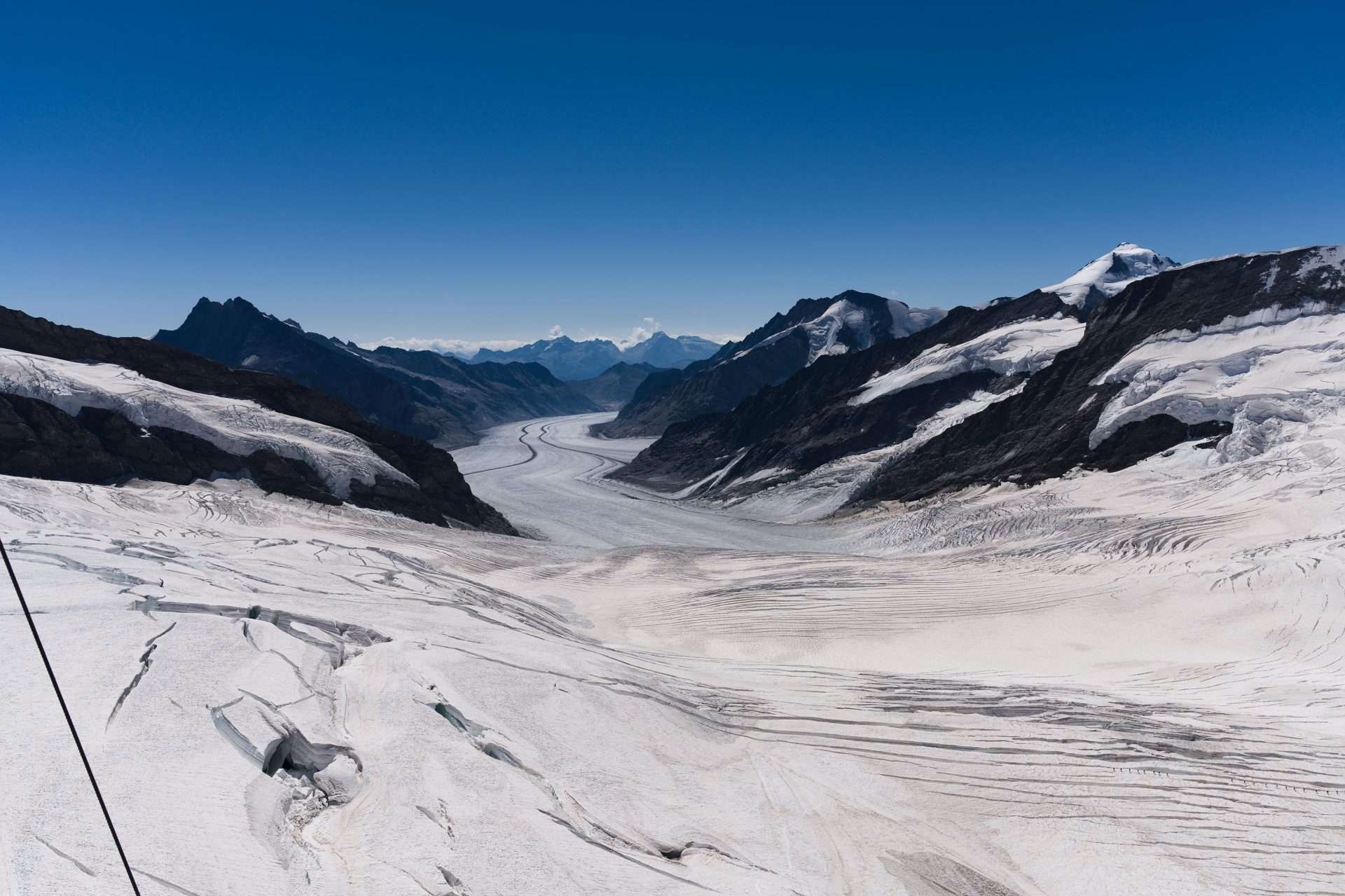
Caption Text Swiss Glaciers Have Lost Almost 20% of Their Ice Since 2021
A winter with very little snowfall followed by intense heatwaves from May to September left glaciers without their protective... - Latest News
Caption Text Rooftop Revolution in France: Why Big Buildings Are Going Green
France is making rooftops part of its response to climate change. Instead of treating roofs as unused building space, new... - Latest News
Caption Text Half of Europe Experienced Very Strong Heat Stress During Summer 2026
More than half of Europe experienced very strong heat stress at some point during summer 2026, as repeated heatwaves pushed temperatures... - Latest News
Caption Text Europe’s Climate Change Bill Is Growing
Climate change is already creating a growing financial burden across Europe. Between 1980 and 2024, weather and climate related... - Latest News
Caption Text By 2030, Most Families in Ethiopia, Malawi, and Nigeria Won’t Be Able to Afford a Healthy Meal
By 2030, more than 90% of people in Malawi and Nigeria, and 75% in Ethiopia, won’t be able to... - Latest News
Caption Text Global Rivers Are Losing Oxygen as the Climate Warms
Rivers around the world are losing dissolved oxygen, an essential condition for healthy freshwater ecosystems. A 2026 study published in Science Advances analysed 21,439...





All Global Risks posts
