
October 12, 2026
Latest News
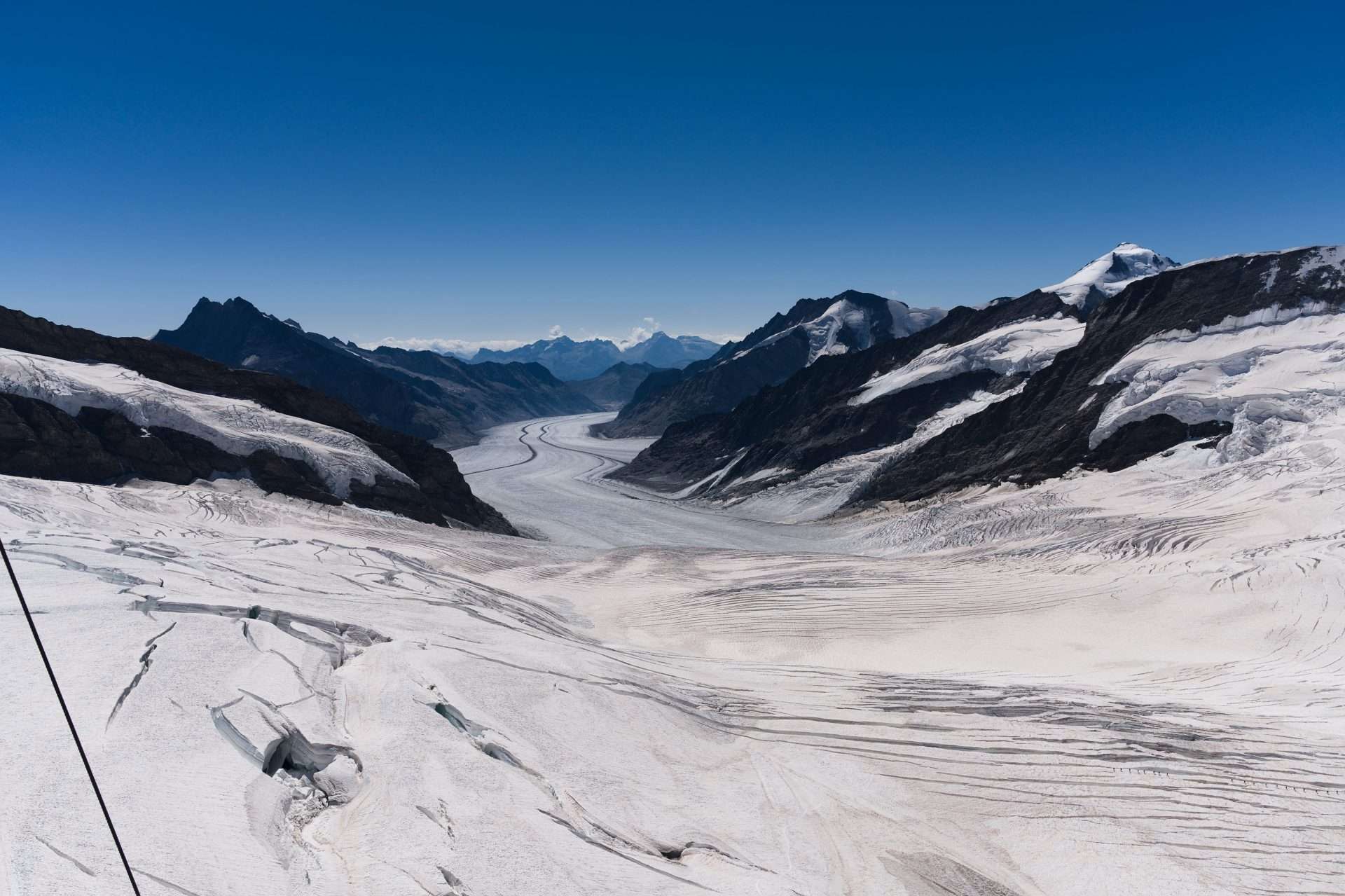
Swiss glaciers have lost more than 5% of their ice volume in 2026. Photo by Jean-Paul Wettstein.
Swiss glaciers have experienced another extreme year of ice loss, with more than 5% of their ice volume disappearing in 2026. A winter with very little snowfall followed by intense heatwaves from May to September left glaciers without their protective snow cover and accelerated melting.
The rapid loss is creating growing risks for water availability, hydropower and ecosystems across Switzerland and downstream parts of Europe.
Swiss Glaciers Lost Ice: What Is Happening

- Swiss glaciers lost more than 5% of their ice volume in 2026, making it the second largest annual loss on record after 2022.
- Switzerland has lost almost one fifth of its glacier volume since 2021, showing how rapidly ice loss is accelerating.
- Average glacier thickness declined by 2.5 to 4 metres, with some glacier tongues losing up to 10 metres during the summer.
- The Aletsch, Rhône and Clariden glaciers experienced their greatest melt on record in 2026. Some smaller glaciers have already disappeared completely.
- Winter 2025/26 was among Switzerland’s ten least snowy winters since measurements began. By September, even glaciers at 3,500 metres had no remaining snow from the previous winter. Normally, some seasonal snow persists at these high elevations into late summer, helping protect the underlying ice from solar radiation. With the snow cover gone, darker glacier ice was exposed earlier and absorbed more solar energy, accelerating melt.
- Swiss glaciers lost around 2,200 billion litres of water between July and September, equivalent to more than four times the annual drinking water consumption of Swiss households.
Swiss Glaciers Lost Ice: Why This is Getting Worse

Rising temperatures and changing snowfall patterns are accelerating glacier loss. Warmer winters reduce snowfall and cause snow to melt earlier, exposing darker glacier ice that absorbs more solar energy. Human driven warming is the main cause of long-term glacier retreat across the Alps. Research estimates that Alpine glaciers lost around 1.3 billion tonnes of ice annually between 2000 and 2014.
The impacts are also linked to wider climate system changes. Arctic warming, which is occurring faster than the global average, alters temperature differences between the poles and lower latitudes, potentially influencing atmospheric circulation (large scale movements of air transporting heat and moisture). These circulation changes can have an effect far beyond the poles, affecting European heatwaves, rainfall and snowfall patterns, influencing Alpine glacier melt.
What This Means for People and Ecosystems
- Water availability: Glaciers act as natural water stores, releasing meltwater during warm and dry periods. As glaciers shrink, this contribution to summer water supplies will decline. This threatens the water supply of roughly two billion people, the UN warns.
- Hydropower: Switzerland generates more than half of its electricity from hydropower, making changes in seasonal water availability important for energy production.
- Agriculture: Reduced glacier melt can affect water availability that is essential for irrigation during hot and dry periods.
- Transport: Low water levels in rivers such as the Rhine can affect inland shipping and increase transport costs.
- Mountain hazards: Rapid glacier retreat and changes in frozen ground can destabilise mountain slopes and increase risks from rockfalls, landslides and floods in some areas.
- Ecosystems: Glacier loss changes the timing and amount of water reaching downstream ecosystems, affecting aquatic habitats and species.

What YOU Can Do
- Reduce carbon pollution: Reduce energy use and choose lower carbon transport and energy options where possible, (i.e. using public transport or cycling, improving home energy efficiency, and choosing renewable electricity where available, etc.).
- Use water efficiently: Avoid unnecessary water use during periods of heat and drought.
- Support climate action: Support credible organisations working on climate mitigation, water resilience and mountain ecosystem protection.
- Stay informed: Follow local water and hazard warnings during periods of extreme heat, drought or heavy rainfall.
- Subscribe to our Climate Alert Bulletin for monthly updates on how global climate risks impact you.
What Needs to Change Systemically
- Reduce carbon pollution: Rapidly reduce greenhouse gas emissions to limit warming and glacier loss. For example, switch to renewable energy at home and make use of public transports.
- Strengthen water management: Improve water storage and allocation for agriculture, ecosystems, households and energy (for example, reservoirs, rainwater storage and coordinated drought planning).
- Improve glacier monitoring: Continue high resolution monitoring of glacier mass, snow cover and meltwater. (GLAMOS continues detailed glacier monitoring, measuring changes in glacier mass, thickness, snow cover and meltwater in collaboration with ETH Zurich and Swiss universities).
- Prepare for mountain hazards: Strengthen monitoring and warning systems for landslides, rockfalls and glacial floods (for example, slope sensors and community flood alerts).
- Protect downstream ecosystems: Plan for changes in the timing, amount, and temperature of glacier fed water (for example wetland restoration).
- Strengthen European cooperation: Coordinate water management across countries sharing Alpine rivers (for example, joint drought planning and data sharing).

Read more: Extreme weather events | Health risks | Climate Risks Daily
Original source: Swiss glaciers suffer ‘disastrous’ year of ice loss
What You Can Do?
Join the Fight Against World's Climate Crisis
SubscribeDiscover global climate challenges and the Polar connection
Spread the WordShare this page to raise awareness
Read More From the Global Risks Category
- Latest News
Caption Text Rooftop Revolution in France: Why Big Buildings Are Going Green
France is making rooftops part of its response to climate change. Instead of treating roofs as unused building space, new... - Latest News
Caption Text Half of Europe Experienced Very Strong Heat Stress During Summer 2026
More than half of Europe experienced very strong heat stress at some point during summer 2026, as repeated heatwaves pushed temperatures... - Latest News
Caption Text Europe’s Climate Change Bill Is Growing
Climate change is already creating a growing financial burden across Europe. Between 1980 and 2024, weather and climate related... - Latest News
Caption Text By 2030, Most Families in Ethiopia, Malawi, and Nigeria Won’t Be Able to Afford a Healthy Meal
By 2030, more than 90% of people in Malawi and Nigeria, and 75% in Ethiopia, won’t be able to... - Latest News
Caption Text Global Rivers Are Losing Oxygen as the Climate Warms
Rivers around the world are losing dissolved oxygen, an essential condition for healthy freshwater ecosystems. A 2026 study published in Science Advances analysed 21,439... - Latest News
Caption Text AI’s Water Footprint: Data Centre Water Use is More Complex Than Metrics Show
Data centres are expanding rapidly to meet demand for artificial intelligence and cloud services, increasing pressure on water, energy,...



All Global Risks posts
