

Latest News
Polar breakdown is a risk multiplier for climate change.
Understanding the Worldwide Risks Amplified by Polar Breakdown
Polar changes are intensifying global climate risks, from $2.98 trillion in disaster costs to rising seas threatening 58m of potential rise. Extreme weather and floods are escalating, driven by Arctic warming. Explore the data and trends revealing how polar shifts impact every corner of the planet.
REPORT CARD
CATASTROPHIC AND COSTLY STORMS,
heat waves and other extreme weather hammering the world’s cities and regions have been linked to changes in the rapidly warming Arctic. Between 2010 and 2019, record-breaking storms, floods, and other natural disasters were the costliest in modern history with losses totaling US$2.98 trillion*.

Latest News
See Full Data
OCEANS AROUND THE WORLD ARE AT THE SHORES OF MANY OF THE WORLD’S MOST POPULATED PLACES.
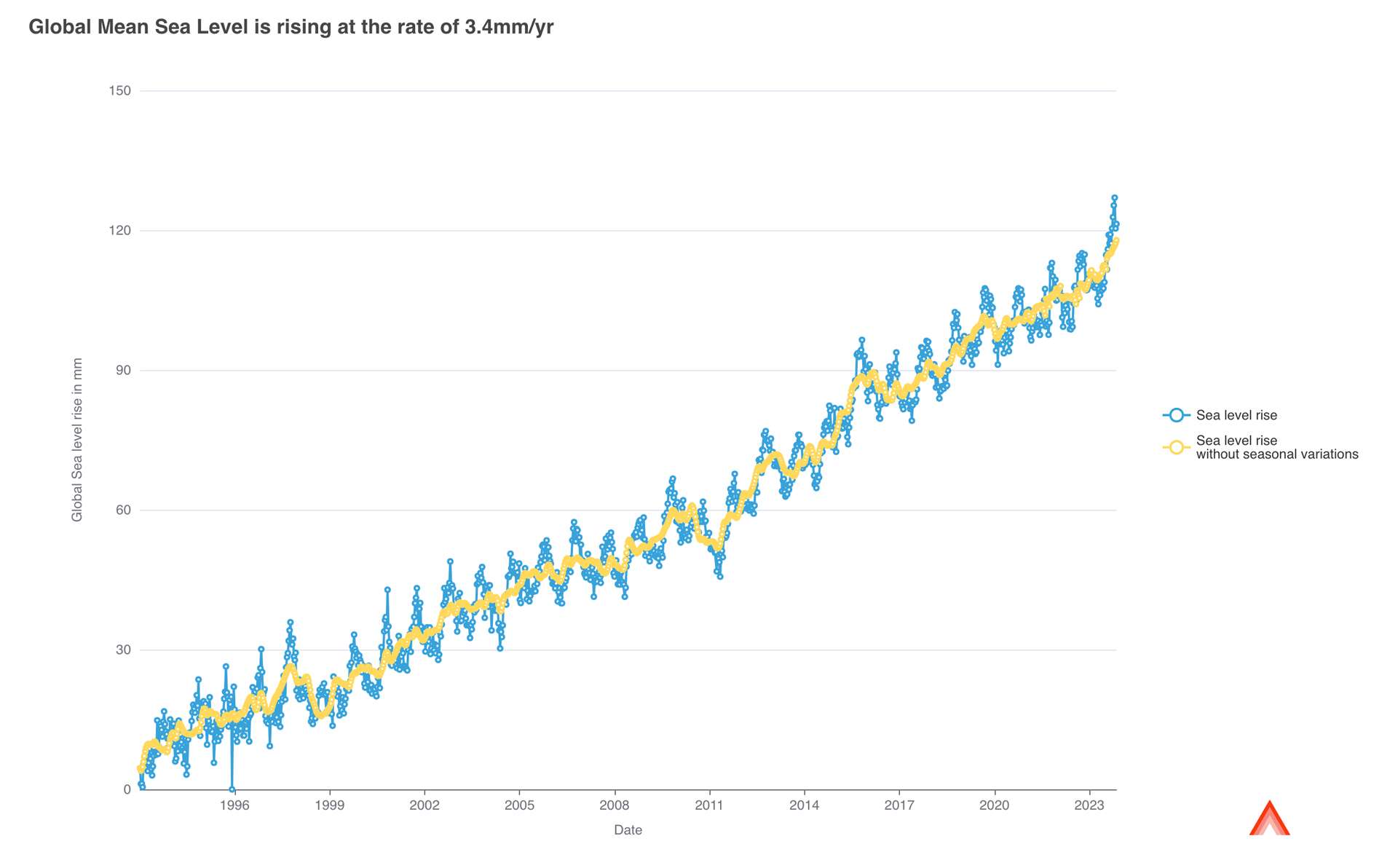
Seas are rising faster than at any time in the past 3,000 years. Coastline flooding of low-lying cities and regions as well as devastating coastal erosion will be worse and happen more often in the decades ahead. Even a slight increase in sea level can make flooding more frequent and severe, damaging homes, infrastructure and farmland. If the global mean sea level rises by 1m by 2100, as projected by some scenarios, annual flood damages could increase by 100 to 1,000 times, affecting up to 20.3% of global GDP. However, this projection may be too optimistic, as we cannot rule out 2m of sea level rise by 2100.
Latest News
See Full Data
If all of Antarctica were to melt, global sea level rise could rise about 58m. Some of this, we now know, is unavoidable, even without further emissions–and if we succeed in keeping global temperatures under 1.5C (Naughten, Holland & De Rydt, 2023).
AR6 SUMMARY
The Assessment Report of the UN’s Intergovern-mental Panel on Climate Change (IPCC) is issued in three parts by hundreds of international scientists every seven years. Widely considered the authoritative word on what’s up with climate and weather around the world, Part 1 of the sixth report (AR6) was released in early August 2021.
Arctic melt-water ups the risk of flooded coastal cities.
Heavy rains, growing worse since the 1950s, will continue to get 7 percent more intense with every 1°C of global warming, according to the UN’s latest special report on climate science, and devastating category 4 or 5 cyclones will happen more often. Cities are projected to suffer more frequent and intense heatwaves as well as heavier rains and runoff. In the world’s many coastal cities, sea level rise and storm surges will combine with more intense rains and storms to make severe flooding far more common. Elsewhere, heatwaves and droughts are expected to occur together more often, including in crop producing areas.
- Heavy rains around the world have been getting increasingly worse and more frequent since the 1950s, and tropical cyclones have grown stronger and more intense over the past four decades.
- Droughts are growing worse and happening more often in some regions.
- Unprecedented extreme storms and other never-seen-before weather events will happen more often into the future, even if emissions are reduced.
- Sea levels around the world are expected to rise by up to 0.55 meters by 2100 even if the world can reduce its CO2 emissions. If emissions are moderate, oceans will climb 0.44-0.76 meters, and they’ll rise 0.63-1.01 meters if CO2 emissions continue to soar.
What You Can Do?
Join the Fight Against World's Climate Crisis
SubscribeDiscover global climate challenges and the Polar connection
Spread the WordShare this page to raise awareness


