Water Insecurity
Water insecurity is a critical global risk intensified by climate change, threatening billions through droughts, floods, and disrupted water cycles.
Water in Crisis: Quick Facts (2026)
- ~50% of large lakes worldwide have lost water since the early 1990s, affecting about 25% of the global population dependent on them.
- Around 70% of major aquifers are in long-term decline, indicating widespread groundwater depletion.
- About 410 million hectares of wetlands (nearly the size of the EU) have been lost over the past 50 years, with an estimated US$5.1 trillion annual loss in ecosystem services.
- Roughly 75% of humanity lives in water-insecure or critically water-insecure countries.
- About 4 billion people face severe water scarcity for at least one month per year, and 2.2 billion lack safely managed drinking water.
- Around 3.5 billion people lack safely managed sanitation services globally.
- Approximately 170 million hectares of irrigated cropland are under high or very high water stress, threatening global food systems.
- Around 3 billion people live in areas where total water storage is declining or unstable, regions that also produce more than half of global food.
- The global economic burden of drought is estimated at ~US$307 billion per year.
- About 1.8 billion people experienced drought conditions (2022–2023) linked to both climate and human water overuse.

- Southern Africa faced heightened drought threats in 2025 according to global hydrological monitoring, signaling increased risk to both water security and food production, particularly where climate change is driving hotter, drier conditions and soil moisture deficits. The report estimates that 30 million people were displaced, with economic losses reaching US$5.5 billion.
- Melbourne’s water storage dropped to ~61%, raising risk of urban restrictions.
- A UN FAO report (Dec 2025) warned that renewable water availability has declined globally, with per‑person freshwater supplies shrinking in regions like Northern Africa, Southern Asia, and Western Asia, intensifying competition over limited resources for agriculture, energy, and drinking water.
- Fifth year of drought; cities like Tehran face water rationing.
Annual Precipitation Loss

The map above shows areas with annual precipitation loss under the 1° C above the 1850‐1900 average scenario, which we already passed in 2017. Explore more about the changes in global precipitation distribution under other scenarios presented in Probable Futures’ predictions.
According to the latest Met Office outlook, global temperatures are projected to stay above 1.4°C relative to pre-industrial levels in 2026, continuing a recent run of exceptionally warm years influenced by both long-term human-driven warming and natural variability. This means the scenario shown on the map is already broadly representative of present-day climate conditions rather than a future projection.
Explore more about the changes in global precipitation distribution under other scenarios presented in Probable Futures’ predictions.
Climate Change Intensifies Water Cycle Disruption
Water Shortages
Sea level rise from melting glaciers in Greenland increases the risk of saltwater intrusion into freshwater supplies. This in turn threatens both food and water security, as highlighted in our Pacific region stories. Extreme drought, such as that experienced in Europe in summer 2022, also has a huge impact on water availability. Other regions at high risk of drought include large parts of Africa, Southeast Asia, and the west coast of the USA.
In East Africa (Feb 2026), drought conditions affected around 4.6 million people and displaced over 135,000 in Somalia alone, with widespread crop and livestock losses linked to persistent soil moisture deficits.

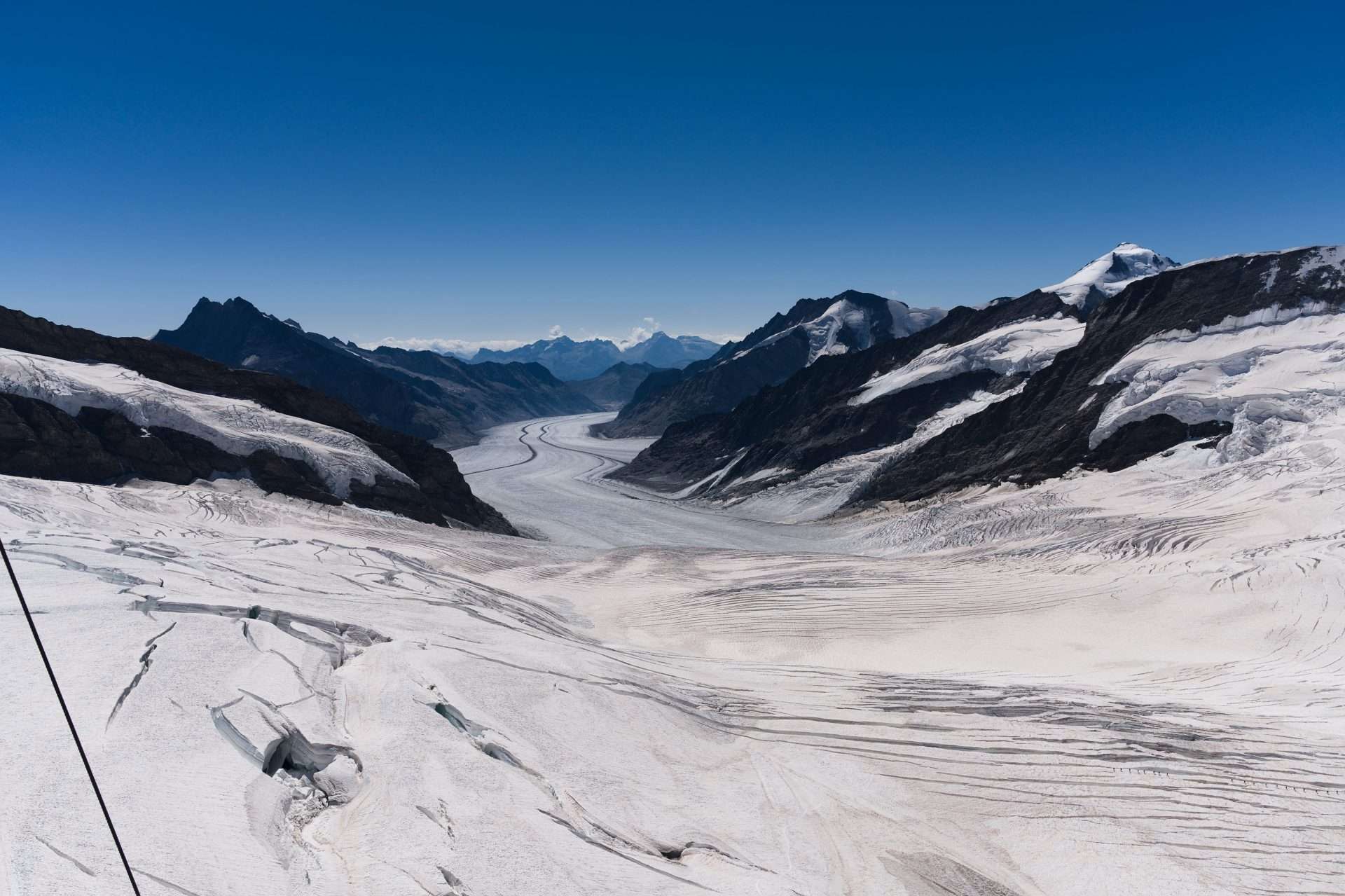
Melting snow and glaciers in the Himalayas have also resulted in changes in the seasonality of the hydrological cycle. These cause significant problems for agriculture, hydroelectric power distribution, and drinking water supplies in urban and rural centres that rely on meltwater.
The ICIMOD HKH Snow Update 2026 reports a strong and sustained decline in seasonal snow across the Hindu Kush Himalaya. Snow persistence is 27.8 percent below the long-term average, which is the lowest level in over two decades and the fourth consecutive year of below-normal conditions. This decline is widespread across major river basins and reduces natural water storage in the region’s mountain “water towers” that support nearly two billion people downstream. Reduced snowpack is expected to lower spring and early summer river flows, increasing pressure on water availability for agriculture, hydropower, and household use. The report warns that these changes are already intensifying drought stress and increasing water insecurity across the region.

Tehran faced an acute water crisis in late 2025, when an Iranian water official reported that storage across the city’s five main dams had fallen to about 170 million cubic meters, roughly half the level recorded at the same time the previous year. Authorities also noted that Iran was experiencing its most prolonged drought in six decades, with rainfall down by around 96 percent compared with the same period the year before. This sharp decline in precipitation and multi-year drought conditions has continued to drive historically low reservoir levels and sustained pressure on urban water supply systems into 2026.
In the Caribbean (June 2026), St Lucia is facing a worsening water crisis, with water authorities reporting that water production in several supply systems has fallen by up to 60% and source capacity is below 50% in some areas, despite the onset of the rainy season. Low inflows, aging infrastructure, and climate variability are limiting recovery even during expected wet periods, forcing reliance on water storage tanks and managed supply restrictions.
Latest Water Insecurity Stories
- Latest News
Caption Text Swiss Glaciers Have Lost Almost 20% of Their Ice Since 2021
A winter with very little snowfall followed by intense heatwaves from May to September left glaciers without their protective... - Latest News
Caption Text Half of Europe Experienced Very Strong Heat Stress During Summer 2026
More than half of Europe experienced very strong heat stress at some point during summer 2026, as repeated heatwaves pushed temperatures... - Latest News
Caption Text Global Rivers Are Losing Oxygen as the Climate Warms
Rivers around the world are losing dissolved oxygen, an essential condition for healthy freshwater ecosystems. A 2026 study published in Science Advances analysed 21,439...