
March 3, 2026
Climate-Vulnerable Communities Are Taking Governments to Court — and Winning
3 min read
Latest News
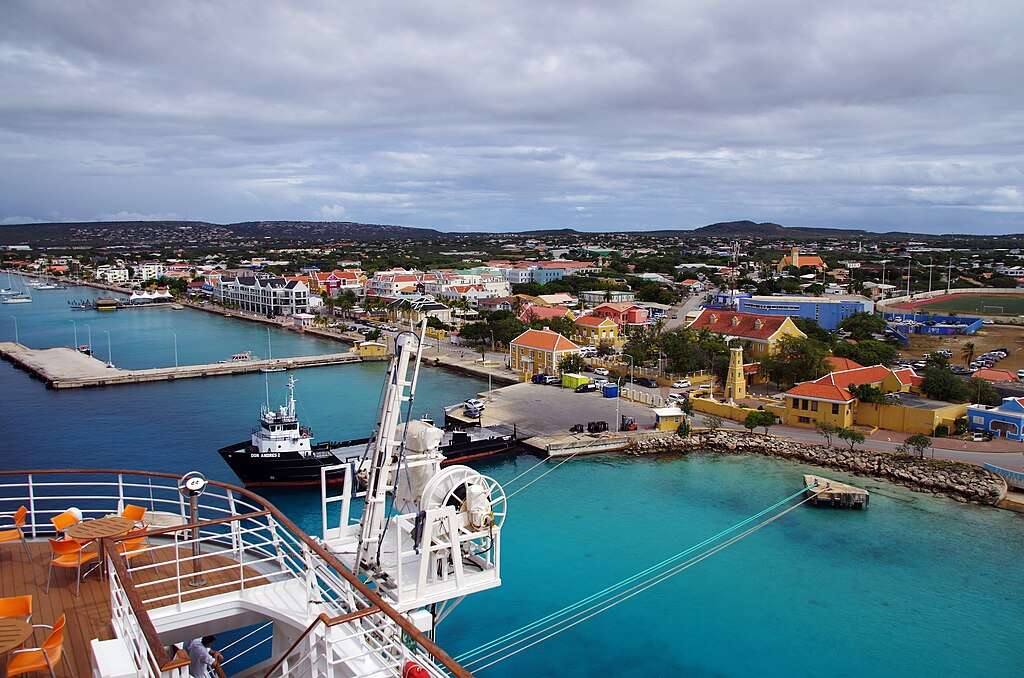
Bonaire, by Balou46, CC BY-SA 4.0 https://creativecommons.org/licenses/by-sa/4.0, via Wikimedia Commons
In January, a court in The Hague found that the Dutch Government discriminated against people in one of its most vulnerable territories by failing to help them adapt to climate change.
The lawsuit, brought by a group of citizens from Bonaire, with Greenpeace Nederland, argued that the Netherlands had long-known about severe climate risks facing the Caribbean island but failed to take action.
The court ruled that this violated Articles 8 and 14 of the European Convention on Human Rights (ECHR) and ordered the Dutch state to adopt a comprehensive adaptation plan and establish binding interim emissions targets within 18 months. The Guardian Jurist
This judgment is historic: it is the first time a court has held a state liable for discriminating against its own citizens by failing to provide a climate adaptation plan, setting a powerful precedent for other communities in climate‑vulnerable territories. Greenpeace
International Growth of Climate Litigation
Climate litigation is now widespread. As of June 2025, there are over 3,099 climate-related cases filed across 55 national jurisdictions and 24 international/regional courts, according to UNEP and Columbia University’s Sabin Center databases.
The United States leads the world in climate litigation with 1,986 cases, but there is significant growth in other regions. Australia, Brazil, the UK, and Germany have more than 51 cases each, and there is significant growth in the global south where over 300 cases have been recorded. Columbia
In 2025, the International Court of Justice issued a landmark decision finding that existing international law obliges all countries to fight global warming – even those not party to the Paris Agreement. Government inaction on climate change may now constitute an “internationally wrongful act”, potentially green-lighting future cross-border climate litigation. Politico
In 2024, The European Court of Human Rights ruled that insufficient climate mitigation can violate the right to private and family life. Columbia
Meanwhile, the International Tribunal for the Law of The Sea ruled in 2024 that greenhouse gases constitute marinue polution under the UN Convention on the Laws of the Sea – establishing the responsibility for due diligence on states, and opening the door for future potential action. Columbia
Why This Matters
Recent high profile cases – from human rights courts to ocean tribunals make one thing clear. It is now legally possible, and increasingly common, to sue governments for climate inaction across much of the world.
Courts worldwide are putting pressure on national governments to adopt ambitious adaption and mitigation policies – or face legal consequences.
For vulnerable countries and communities, especially in low-lying islands and climate-exposed regions, these decisions are becoming essential tools for survival.
What You Can Do?
Join the Fight Against World's Climate Crisis
SubscribeDiscover global climate challenges and the Polar connection
Spread the WordShare this page to raise awareness
Read More From the Global Risks Category
- Latest News
Caption Text Storm Boelo Disrupts Power Supply to 90,000 UK Properties
Storm Boelo disrupted power supply in the UK. It brought severe winds and flooding to some parts of Scotland... - Latest News
Caption Text Arctic Permafrost Thaw Contaminates Drinking Water in Norwegian Town
Residents of Longyearbyen, a town in Norway’s Svalbard group of islands, have been advised not to drink tap water... - Latest News
Caption Text Afghanistan’s Drought Crisis Is Pushing Girls into Child Marriage
Drought, hunger and extreme poverty are pushing families in Afghanistan into desperate choices, with some parents arranging marriages for... - Latest News
Caption Text 5 Steps to Biodiversity Metrics With Data You Already Have
For many businesses, nature-related reporting feels like another compliance burden, with new frameworks and data requests but little obvious... - Latest News
Caption Text Hurricane Polo Shows How Climate Change Is Making Pacific Storms Stronger
Hurricane Polo rapidly intensified in the eastern Pacific in September 2026, becoming a Category 5 hurricane within about 24... - Latest News
Caption Text Indonesia’s Wildfires Are Creating a Major Health and Haze Crisis
Indonesia is facing a severe wildfire crisis as unusually dry conditions fuel fires across Sumatra and Borneo. The resulting...


All Global Risks posts

